


2026 Hyundai EV vs. Hybrid: Which Electrified Vehicle Fits Your Life?
Picking between a 2026 Hyundai electric vehicle (EV) and a hybrid comes down to where you drive, how far you go, and which trade-offs you’re willing to make for efficiency, convenience, and winter performance. This guide lays out the practical differences between battery-electric and hybrid drivetrains, compares Hyundai’s 2026 model families, and focuses on ownership costs and real-world winter behavior for drivers in Northwest Indiana. You’ll see how charging and refueling routines differ, which Hyundai models suit commuting, family hauling, or long trips, and clear cost comparisons using local electricity and fuel assumptions. We walk through EV recommendations (Ioniq line, Kona Electric), hybrid choices (Tucson, Santa Fe, Palisade, Elantra, Sonata), ownership examples, winter tips, and charging/refueling strategies so you can match a vehicle to your routine. Keywords like “2026 ev vs hybrid comparison,” “cost of owning Hyundai EV in Indiana,” and 2026 best car for midwest winters are included to answer common buyer questions for Hyundai’s electrified lineup.
What Are the Key Differences Between Hyundai EVs and Hybrids in 2026?
Battery-electric vehicles (EVs) use a high-voltage battery and one or more electric motors to drive the wheels, while hybrids pair an internal combustion engine with electric motors and a smaller battery to boost fuel efficiency. That mechanical difference leads to different ownership realities: EVs need charging infrastructure and offer instant torque with near-zero tailpipe emissions, while hybrids refuel at gas stations and extend range without depending on public chargers. Maintenance also varies — EVs skip oil changes but require battery monitoring, and hybrids keep many ICE service items while cutting gasoline consumption. Environmentally, EVs eliminate local tailpipe emissions during operation; hybrids reduce emissions versus conventional gas cars but still burn fuel. The sections that follow explain how each system works and list pros and cons so you can weigh range, convenience, and lifecycle costs before deciding.
How Do Electric Vehicles and Hybrids Work?
An EV draws energy from a large traction battery that powers electric motors at the wheels; regenerative braking recaptures energy during deceleration to top up the battery. Without a conventional transmission or continuous fuel feed, EV drivetrain management focuses on state-of-charge, motor efficiency, and thermal control. A hybrid combines an internal combustion engine with electric motors and a smaller battery; the system can run on electric assist at low loads, switch to engine power at higher loads, or blend both for acceleration to optimize fuel use across driving conditions. Both architectures commonly use regenerative braking to improve efficiency, and the way each balances energy flow affects driving feel, service needs, and how you fuel or charge the vehicle.
What Are the Pros and Cons of Hyundai EVs vs Hybrids?
Your priorities—range and charging convenience, operating cost, and cold-weather reliability—will decide which powertrain fits best. EV strengths include lower per-mile energy cost, a quiet cabin, and strong initial acceleration; drawbacks include charging time and range sensitivity to temperature and accessories. Hybrids offer easier refueling, generally longer total range without charging, and simpler long-range planning for rural driving, but they still consume gasoline and require ICE maintenance. For example: if you have reliable overnight home charging and mostly urban driving, an EV often saves money and improves daily comfort. If you regularly take long rural trips or don’t have charging access, a hybrid may be more practical. These trade-offs shape model choices, which we detail next for Hyundai’s 2026 lineup.
Which 2026 Hyundai EV Models Should You Consider?
Hyundai’s 2026 EV lineup centers on the Ioniq family and the Kona Electric, each aimed at different buyers. Your choice should depend on range needs, charging speed, interior space, and available AWD — factors that determine whether a compact city EV or a family-friendly crossover is the right fit.
EV spec overview: the table below summarizes representative attributes that matter for everyday use — expected range, battery size, seating, and charging capability — as comparative guidance for planning your 2026 purchase.
| Model | Representative Range | Battery Capacity (kWh) | Seating / Use Case |
|---|---|---|---|
| Ioniq 5 | 256–303 miles (depends on trim) | Mid–large pack | Compact crossover — tech-focused family use |
| Ioniq 6 | About 310 miles (EPA estimate) | Mid–large pack | Sleek sedan for efficient highway driving |
| Kona Electric | Around 258 miles (EPA estimate) | Compact pack | Urban commuter — easy parking and value entry |
This table highlights relative strengths across Hyundai’s 2026 EV options. The next paragraphs explain features and lifestyle fit, followed by a short dealership note if you want to see them in person.
What Are the Features and Range of the Hyundai Ioniq 5 and Ioniq 6?
The Ioniq 5 is a compact crossover with a roomy cabin, flexible cargo solutions, and user-focused tech. Its EV architecture supports competitive fast-charging and available AWD on higher trims — useful for winter traction or light towing. The Ioniq 6 prioritizes aerodynamic efficiency and long-range highway performance with a sedan profile designed for steady cruising and lower drag. Both models include Hyundai SmartSense safety features and modern infotainment, making them solid choices for buyers who value tech, comfort, and low running costs. Knowing these differences helps you match a model to your commute, passenger needs, and cargo habits.
(Dealer note: Webb Hyundai Highland stocks a wide selection of electrified vehicles — new, used, and certified pre-owned. If you’re interested in Ioniq models, check availability, schedule a test drive, or ask for a demonstration of charging and AWD features.)
How Do the Ioniq 9 and Kona Electric Suit Different Lifestyles?
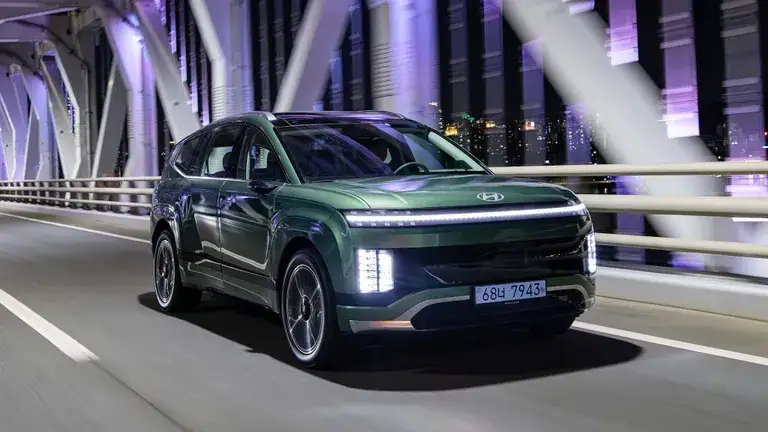
The Ioniq 9 represents a larger, family-oriented EV offering more interior space, advanced infotainment, and extended range for multi-passenger road trips — appealing to families who prioritize comfort and cargo capacity. The Kona Electric is aimed at city drivers and daily commuters who want a small footprint, nimble handling, and lower entry cost to electrification. Kona’s smaller battery and compact chassis make parking easier while still delivering useful daily range. When balancing budget, passenger frequency, and parking constraints, choose between a larger Ioniq-style EV for space or a Kona-class model for urban convenience.
What Are the Top 2026 Hyundai Hybrid Models and Their Benefits?
Hyundai’s hybrids pair efficient gasoline engines with electric assist to cut fuel use while keeping refueling convenience — a strong option for mixed driving and places with limited charging. Key 2026 hybrid models include the Palisade Hybrid, Santa Fe Hybrid, Elantra Hybrid, and Sonata Hybrid, covering needs from compact SUV efficiency to three-row family transport.
| Model | Typical Strength | Ideal Buyer |
|---|---|---|
| Tucson Hybrid | Compact SUV efficiency with optional AWD | Small families and commuters who want SUV utility |
| Santa Fe Hybrid | Mid-size balance of space and mpg | Families needing cargo room and improved economy |
| Palisade Hybrid | Three-row comfort with hybrid efficiency considerations | Larger families prioritizing space and passenger comfort |
This table shows where hybrids fit in Hyundai’s lineup when utility and fuel economy matter. The next sections break down SUV and commuter sedan benefits in practical terms.
How Efficient Are the Tucson, Santa Fe, and Palisade Hybrid SUVs?
Hyundai’s hybrid SUVs aim to give you SUV versatility with meaningful fuel savings over conventional gasoline models. The Tucson Hybrid delivers compact dimensions, strong combined mpg, and available AWD for better traction. The Santa Fe Hybrid balances interior space and cargo flexibility with solid fuel economy for errands and highway travel. The Palisade Hybrid prioritizes three-row comfort and capability while improving city efficiency compared with a gas-only Palisade; buyers should weigh passenger and towing needs against slightly lower economy versus smaller hybrids. These distinctions help SUV shoppers choose the hybrid that fits their family and cargo needs.
What Advantages Do the Elantra and Sonata Hybrids Offer for Commuters?
The Elantra Hybrid and Sonata Hybrid are built for commuters who log steady miles and want high combined mpg without changing fueling habits. The Elantra Hybrid is a compact, budget-friendly choice that excels in city fuel economy and easy parking, while the Sonata Hybrid gives a roomier mid-size cabin and steady highway efficiency for longer commutes. Both offer driver-assist and infotainment features that make daily driving safer and more comfortable. If your daily roundtrip is roughly 30–60 miles, a hybrid sedan often cuts monthly fuel costs while keeping refueling predictable for a busy schedule.
How Do Ownership Costs Compare for Hyundai EVs and Hybrids in Northwest Indiana?
Ownership costs diverge mainly in energy expenses, maintenance schedules, and incentive eligibility — and local conditions in Northwest Indiana matter. EVs usually deliver lower per-mile energy costs compared with gasoline but have higher upfront price and possible home charger installation costs. Hybrids often cost less to buy and don’t need a home charger, but they continue to use gasoline. Maintenance differs: EVs skip oil changes and many transmission services but need battery and thermal-system monitoring; hybrids keep most ICE service items plus hybrid diagnostics. Below is a concise cost comparison showing representative running-cost attributes for a typical Hyundai EV versus a hybrid using local-rate assumptions to illustrate annual differences for Northwest Indiana drivers.
Cost comparison overview: the table below compares representative energy and running-cost attributes for one EV model and one hybrid model using conceptual local-rate assumptions to illustrate annualized differences for Northwest Indiana drivers.
| Vehicle | Attribute | Representative Value |
|---|---|---|
| Ioniq-class EV | Energy cost per 1,000 miles | Generally lower than gasoline; varies with home vs. public charging |
| Tucson Hybrid | Fuel cost per 1,000 miles | Typically higher than EV energy cost; depends on mpg and fuel price |
| Comparison note | Maintenance frequency | EVs: fewer routine services. Hybrids: typical ICE services plus hybrid checks. |
This table shows relative directions rather than guarantees — actual costs depend on driving habits, energy prices, and incentives. The following section covers purchase prices, incentives, and financing, with a local dealership note for readers ready to act.
(Integration: Webb Hyundai Highland carries a full range of new, used, and certified pre-owned Hyundai electrified vehicles and a finance center focused on customer needs. Finance specialists can explain lease and purchase choices and local incentive eligibility. Northwest Indiana customers can schedule a test drive or finance consultation at Webb Hyundai Highland to compare EV and hybrid payment scenarios.)
What Are the Purchase Prices, Incentives, and Financing Options for 2026 Models?
Prices for 2026 Hyundai electrified models vary by trim, battery, and equipment; EVs typically have a higher MSRP than comparable hybrids because of larger battery packs and added tech. Potential incentives include federal EV tax credits (subject to eligibility and rules), state or local rebates, and utility programs for home charger installation — Indiana buyers should confirm current programs before finalizing financing. Financing and leasing help manage upfront cost differences, but they trade monthly payment for long-term ownership savings. Webb Hyundai Highland’s finance team can share current specials, warranty details, and any maintenance plans to help you compare total cost of ownership and pick the plan that fits your budget and driving needs.
How Do Maintenance, Insurance, and Fuel/Electricity Costs Differ?
EV maintenance routines are generally simpler — no oil changes and fewer moving parts — which can lower scheduled service visits. EV owners still need to monitor battery health, cooling systems, and high-voltage components. Hybrids keep standard ICE maintenance like oil and filter changes, though regenerative braking often reduces brake wear. Insurance costs depend on model, equipment, and driver profile; EVs may carry higher premiums in some cases because of battery and specialist repair costs, though discounts and credits can offset that. Annual fuel or electricity costs hinge on miles driven, local electricity rates, and fuel prices; many Northwest Indiana drivers with overnight home charging see lower per-mile costs with EVs, while hybrid owners benefit from simpler refueling logistics. A realistic maintenance checklist and energy budget will help set expectations for long-term ownership.
How Do Hyundai EVs and Hybrids Perform in Midwest Winters?
Winter performance matters in the Midwest because cold weather affects battery efficiency, charging behavior, and traction — all of which change real-world range and drivability. EV batteries typically lose usable range in cold weather because of higher internal resistance and extra energy used for cabin heating, while hybrids keep more consistent range since the engine provides propulsion and heat. Hyundai mitigates winter effects with battery thermal management and available AWD systems, but drivers should plan for seasonal range changes, precondition the cabin and battery when possible, and choose tires suited for snow. The next subsections cover winter-ready features and model recommendations for snowy, icy conditions in Northwest Indiana.
What Winter Driving Features Do Hyundai Models Offer?
Hyundai models commonly include traction and stability systems like HTRAC all-wheel drive, selectable drive modes including “Snow,” heated steering and seats, and battery thermal management on EVs to regulate pack temperature. HTRAC shifts torque between axles to improve grip on low-friction surfaces, while heated cabin features reduce HVAC load and help preserve EV range when used smartly. Battery preconditioning — available via vehicle settings or the mobile app — warms the battery before driving or charging to improve initial range and charging acceptance in cold starts. Choosing winter tires and keeping proper tire pressure also has a big effect on traction and efficiency during Midwest winters. Together, these features boost safety and comfort in snowy conditions. winter models.
Winter-ready Hyundai features include:
- HTRAC AWD for better traction on snow and ice.
- Battery thermal management and preconditioning for EVs.
- Heated steering, seats, and remote climate control to conserve range.
These features reduce cold-weather range loss and enhance safety. Selecting AWD-equipped trims and a winter tire package gives the most reliable year-round performance in Northwest Indiana.
Which Hyundai EV or Hybrid Is Best Suited for Cold and Snowy Conditions?
For Midwest winters, consider AWD-equipped options: AWD EV variants (for example, AWD Ioniq trims) send power to both axles for improved low-speed grip, while Tucson Hybrid or Santa Fe Hybrid with HTRAC offer ICE backup and strong traction without relying on chargers. Hybrids have an edge in very cold or remote conditions because the engine supplies cabin heat and reduces range anxiety on long rural runs. For mixed urban/suburban drivers with dependable home charging and shorter daily ranges, an AWD EV with solid thermal management can work well when combined with battery preconditioning and winter tires. Practical tips: precondition the cabin while plugged in, avoid heavy acceleration in cold weather, and plan charging stops with a buffer to offset expected range reduction.
What Charging and Refueling Options Are Available for Hyundai EVs and Hybrids?
Charging and refueling strategies differ: EVs need a charging plan that mixes home Level 1 or Level 2 charging with occasional public DC fast charging for long trips, while hybrids refuel at widely available gas stations. Connector types (like CCS) and charger level determine charge speed and convenience. Trip planning includes mapping public chargers and following charging etiquette. The table below summarizes common charging and refueling workflows to clarify cost and time trade-offs for Indiana drivers considering electrified Hyundai models.
Charging overview: this table outlines common charging/refueling approaches and compares practical charge times and relative costs to help you plan home installation and public charging behavior.
| Charging/Refueling Option | Typical Trait | Practical Impact |
|---|---|---|
| Home Level 1 (120V) | Slow, plug-in overnight | OK for low-mileage drivers; minimal setup |
| Home Level 2 (240V) | Faster overnight charging | Recommended for daily commuters; electrician installation required |
| Public DC Fast Charge | Rapid on-route replenishment | Great for long trips; higher per-kWh cost than home charging |
Knowing these options helps you decide whether to install a Level 2 charger, rely on public DC fast charging for occasional long trips, or choose a hybrid to avoid charger dependence. Next we explain how to set up home charging and review hybrid refueling benefits.
How Does Home and Public Charging Work for Hyundai EVs in Indiana?
Home charging typically starts with an electrical inspection, selecting a Level 2 charger that matches your vehicle’s onboard charger, and checking utility rebates to offset installation. A Level 2 wall unit usually restores a day’s worth of range overnight for most commuters, while public DC fast chargers rapidly replenish range on long trips but often cost more per kWh. Public charging etiquette includes moving your vehicle when finished, checking connector compatibility, and using apps to find stations and monitor availability. Indiana drivers should map chargers along frequent routes to avoid surprises. Overnight home charging during off-peak hours is usually cheaper than public charging, and some utilities offer special EV rates that reduce operating costs further.
What Are the Refueling Advantages of Hyundai Hybrid Vehicles?
Hybrids keep the convenience of quick refueling at any gas station, making long-distance travel simple without planning charging stops. That ubiquity is helpful for rural travel and reduces range anxiety for drivers who regularly go beyond charging corridors. Hybrids also let you plan routes more flexibly when chargers are sparse or when a long DC fast stop isn’t practical. For many Midwest drivers who value predictability, hybrids are an easy way to gain efficiency without changing refueling habits.
Hybrid refueling advantages:
- Fast, widely available refueling at gas stations nationwide.
- Extended range without relying on charging infrastructure.
- Simpler long-distance and rural driving with less planning.
If convenience and long-range flexibility matter more than home charging access, a hybrid is a sensible choice. EV owners who can install home charging and plan trips can enjoy lower per-mile energy costs and reduced local emissions.
For help comparing specific 2026 Hyundai EV and hybrid trims, scheduling a test drive, or reviewing local financing and incentives, Webb Hyundai Highland offers dedicated sales and service support at their Highland location. We maintain electrified inventory, provide certified EV service, and can guide you through Hyundai ownership programs. Contact Webb Hyundai Highland to arrange a demo, discuss finance options, or book service — staff can explain qualifying programs and help match the right Hyundai to your Northwest Indiana driving needs.
Frequently Asked Questions
1. How do the environmental impacts of a Hyundai EV and a hybrid compare?
An EV produces zero tailpipe emissions while driving, which lowers local air pollution. Hybrids still use an internal combustion engine, so they emit greenhouse gases, though at reduced levels compared with traditional gasoline-only cars. If reducing local emissions is a priority, an EV is the cleaner choice during operation, especially in urban areas where air quality matters.
2. How do Hyundai EVs and hybrids hold value at resale?
Resale value depends on market trends, battery condition, and overall vehicle care. EVs have seen growing demand as buyers shift toward electrification, which can support resale prices. Hybrids historically retain value because of consistent fuel savings, though competition from newer EV models can affect demand. Local incentives, fuel prices, and advances in battery tech also influence resale outcomes for both types.
3. What charging options are available for Hyundai EVs, and how do they differ?
Hyundai EVs support Level 1 (120V) slow charging, Level 2 (240V) faster home charging, and public DC fast charging for rapid top-ups on long trips. Level 1 works for low-mileage drivers, Level 2 is recommended for daily commuters, and DC fast chargers are best for long-distance travel but usually cost more per kWh. Choose a strategy that matches your driving habits and access to charging.
4. How do winter conditions affect Hyundai EVs and hybrids?
Cold weather can reduce EV range because batteries are less efficient and cabin heating uses energy. Hybrids tend to keep more consistent range since the engine provides propulsion and cabin heat. Features like battery thermal management and AWD help in winter, but hybrids may feel more reliable in extreme cold or remote areas without chargers.
5. Are there special maintenance considerations for Hyundai EVs versus hybrids?
EVs generally require fewer routine services — no oil changes and fewer moving parts — but owners should monitor battery health and cooling systems. Hybrids keep traditional ICE maintenance like oil changes and filters while also needing hybrid-specific diagnostics. Knowing these differences helps you budget for long-term care.
6. What incentives are available for buying Hyundai EVs or hybrids in Indiana?
Indiana buyers may qualify for federal EV tax credits (when eligible), state or local rebates, and utility incentives for home charger installation. Incentive availability changes, so check current programs and eligibility rules to see how they might lower your purchase cost.
7. How do Hyundai EVs and hybrids compare for everyday driving?
EVs offer instant torque, quiet operation, and a smooth, peppy feel — great for city driving. Hybrids combine electric assist with a gasoline engine for familiar operation and predictable long-range performance. Which feels better depends on your priorities for performance, efficiency, and fueling convenience.
Conclusion
Choosing a 2026 Hyundai EV or hybrid starts with your daily driving, charging access, and winter needs. This guide gives practical comparisons on models, ownership costs, and cold-weather performance so you can make an informed decision. To see Hyundai’s electrified lineup in person and compare options side-by-side, visit Webb Hyundai Highland — our team can help you find the right vehicle for your Northwest Indiana lifestyle and budget.
0 comment(s) so far on 2026 Hyundai EV vs. Hybrid: Which Electrified Vehicle Fits Your Life?