


Your Hyundai Service Schedule by Mileage: 15K, 30K, 60K and 100K Intervals
Your Hyundai Service Schedule by Mileage: What Happens at 15K, 30K, 60K and 100K for Highland, IN Drivers
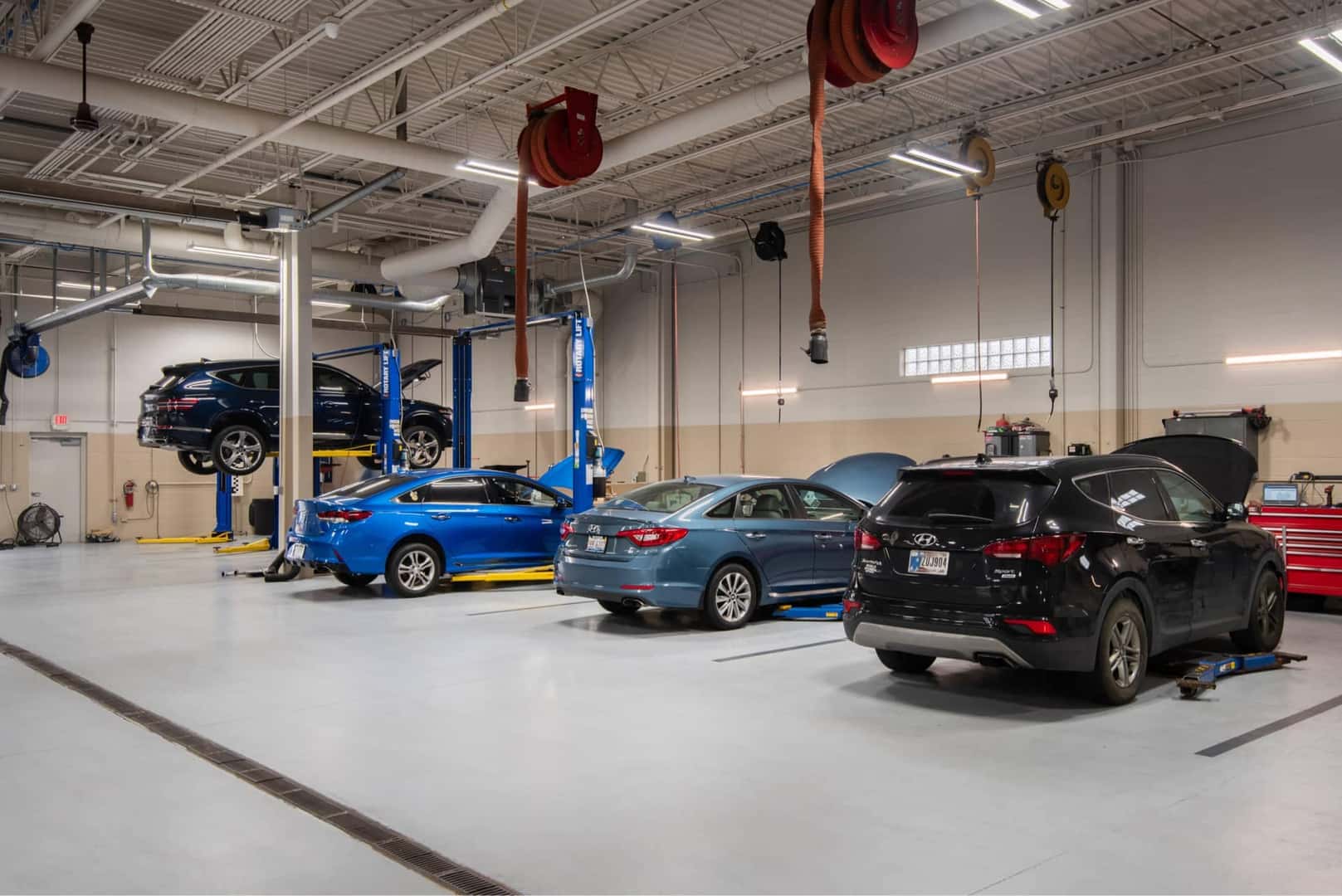
Most Hyundai owners know they are supposed to follow a maintenance schedule. Far fewer know what that schedule actually asks for at each mileage marker, or why the 30,000-mile visit looks so different from the 15,000-mile one. The result is a lot of guesswork, a lot of deferred maintenance, and occasionally a repair that could have been a $60 inspection.
Your Hyundai’s maintenance schedule is built around intervals, and each interval has a purpose. Some items are simply checked. Some are replaced on a fixed clock regardless of how the car looks. And a few depend entirely on how and where you drive, which matters a great deal in Northwest Indiana, where road salt, stop-and-go traffic on Indianapolis Boulevard, and hard winters all shorten component life.
Below is a plain-language walk through the Hyundai service schedule by mileage, what the service department at Webb Hyundai Highland actually does at each stop, and how to tell whether your driving puts you on the standard schedule or the more demanding one. Always confirm the specifics against the maintenance schedule in your own owner’s manual, since requirements vary by model year and powertrain.
Why does Hyundai use mileage intervals instead of just fixing things when they break?
Because most drivetrain failures are preceded by months of gradual wear that produces no symptoms a driver can feel. Interval-based maintenance catches wear while it is still cheap to address.
Fluids degrade chemically before they degrade visibly. Brake pads lose friction material long before they squeal. A cabin air filter clogs gradually, so you never notice the airflow dropping. Interval maintenance exists to intercept all of that on a predictable schedule instead of an emergency one.
There is a warranty dimension too. Hyundai’s powertrain coverage assumes the vehicle has been maintained according to the published schedule, and service records are the evidence of that. Keeping the intervals is partly mechanical protection and partly documentation.
What happens at every oil change interval?
The recurring visit covers engine oil and filter, a tire rotation, and a multi-point inspection. It is the backbone of the whole schedule and the visit most owners actually see.
On most recent Hyundai models running full synthetic oil, this interval lands around every 7,500 miles under normal conditions, with severe-duty driving pulling it shorter. Your owner’s manual is the authority for your specific model year and engine.
- Engine oil and oil filter replacement
- Tire rotation, plus pressure set to the door-jamb spec
- Multi-point inspection covering brakes, belts, hoses, lights and fluid levels
- Battery state-of-health check, which matters more than most owners think in Indiana winters
The inspection is the part with the most value and the least glamour. It is where a technician catches the weeping coolant hose or the brake pad at 3 millimeters before either becomes a tow.
What does the 15,000-mile service include?
At 15,000 miles you get the standard oil-change items plus a cabin air filter replacement and a closer look at brakes and suspension components.
This is the first interval where replacement parts beyond oil and filter typically enter the picture. The cabin air filter is the headline item, and it is one owners feel immediately: a clogged filter reduces airflow, fogs windows more slowly, and carries a musty smell into the cabin.
- Cabin air filter replacement
- Brake pad, rotor and caliper inspection with measurements recorded
- Suspension and steering component inspection
- Drive belt and cooling system inspection
If you commute through Highland, Griffith and Munster on short trips, expect brake wear to show up earlier here than the mileage alone would suggest.
Why is the 30,000-mile service a bigger visit?
The 30,000-mile interval adds the engine air filter and a round of fluid inspections, and it is the point where several wear items reach the end of a normal service life at once.
Thirty thousand miles is roughly two to three years of typical driving, which is long enough for brake fluid to absorb moisture, for the engine air filter to load up with debris, and for the first real decisions about brakes and tires to arrive.
- Engine air filter replacement
- Brake fluid condition test, with replacement based on moisture content and time in service
- Automatic transmission fluid inspection
- Coolant condition and level check
- Full underbody and exhaust inspection, useful after a couple of salt seasons
This is also the visit where a service advisor can give you a genuinely useful forecast: which items are fine, which will need attention within the next 10,000 miles, and which can safely wait.
What is different about the 60,000-mile service?
At 60,000 miles the focus shifts from filters to fluids and from inspection to replacement. Spark plugs, transmission fluid and coolant commonly come due in this window.
By 60,000 miles most of the cheap consumables have been cycled a few times, and the maintenance conversation moves to the systems that are expensive to neglect.
- Spark plug replacement on many gasoline engines
- Automatic transmission fluid service, depending on model and driving conditions
- Engine coolant replacement on some model years
- Drive belt replacement if inspection shows glazing or cracking
- Comprehensive brake service, since most vehicles need pads and often rotors by this point
Which of these apply to your vehicle varies meaningfully by model year, engine and whether you drive a hybrid or a conventional powertrain, so treat this as a map rather than a bill of materials.
What should I expect at 100,000 miles and beyond?
The 100,000-mile service is a full-system reset: remaining long-life fluids, ignition components, and a thorough inspection of everything that has now been in service for a decade of Indiana weather.
Reaching 100,000 miles on a well-maintained Hyundai is unremarkable, and that is the point. The vehicles that get there comfortably are the ones that did not skip the 30K and 60K visits.
- Long-life coolant replacement if not already done
- Spark plugs and ignition components as specified
- Transmission and, where applicable, differential or transfer case fluid
- Suspension inspection with attention to bushings, struts and mounts
- Detailed corrosion inspection of brake and fuel lines
After 100,000 miles, the schedule largely repeats. The inspections become more valuable than the replacements, because you are now managing the aging of the whole vehicle rather than the wear of individual parts.
Am I on the normal schedule or the severe-duty schedule?
More Northwest Indiana drivers fall under severe-duty conditions than realize it. Short trips, extreme cold, heavy traffic, towing and salted roads all qualify.
Hyundai publishes two maintenance schedules, and the severe one is not for unusual abuse. It is for conditions that describe an ordinary Indiana commute.
- Repeated trips under five miles, especially in freezing weather
- Extended idling or long stretches of stop-and-go driving
- Driving on salted, dusty or gravel roads
- Towing a trailer or carrying heavy loads
- Mountain or sustained high-load driving
If two or more of those describe your week, the shorter intervals are the ones that apply to you. A service advisor at Webb Hyundai Highland can help you decide honestly rather than optimistically.
Do hybrid and electrified Hyundai models follow the same schedule?
No. Electrified powertrains eliminate or extend some items and add others, so the schedule differs meaningfully by model. Check the maintenance section of your specific owner’s manual.
Hybrid and battery-electric models change the maintenance picture. Regenerative braking often extends brake pad life substantially. Some electrified models have no engine oil to change at all, while others still do. Cooling systems for battery and power electronics introduce service points that a conventional car does not have.
What stays constant: tires, cabin air filter, brake fluid, suspension components and the annual inspection habit. What changes varies enough between the Elantra Hybrid, Tucson Hybrid, Santa Fe Hybrid, IONIQ 5 and IONIQ 6 that generalizing is a disservice. Bring the vehicle in and let the schedule for your VIN drive the conversation.
How do I keep service records that actually protect my warranty?
Have the work performed and documented by a dealership or qualified shop, keep every invoice, and make sure each record lists the date, mileage and specific service performed.
Warranty disputes are usually documentation disputes. A pile of receipts that say only “service” is much weaker than a set of invoices that name the interval, the parts and the mileage.
Servicing at Webb Hyundai Highland has a practical advantage here: the work is logged against your VIN, so the history travels with the vehicle whether or not you keep the paperwork. That also helps at trade-in time, when a documented maintenance history is one of the few things an appraiser can verify rather than take on faith.
Hyundai Service Schedule at a Glance
| Mileage Interval | Typical Focus |
|---|---|
| Every oil change interval | Oil and filter, tire rotation, multi-point inspection, battery check |
| 15,000 miles | Cabin air filter, brake and suspension inspection |
| 30,000 miles | Engine air filter, brake fluid test, transmission and coolant inspection |
| 60,000 miles | Spark plugs, transmission fluid, coolant, likely brake service |
| 100,000 miles | Long-life fluids, ignition components, full corrosion and suspension review |
| Severe-duty driving | Shorter intervals across the board; common for short Indiana commutes |
How to Schedule and Prepare for Your Next Hyundai Service Visit
- Find your current odometer reading and round to the nearest interval to see which service is next.
- Open the maintenance schedule section of your owner’s manual and confirm the items listed for your model year and powertrain.
- Decide honestly whether your driving qualifies as severe duty, using the list above.
- Book online through the Webb Hyundai Highland scheduling page, or call the service department if you want to discuss the visit first.
- Note any symptoms before you arrive: new noises, when they happen, and at what speed.
- Ask the advisor to prioritize findings into what needs attention now and what can wait until the next interval.
- Keep the invoice, and check that it lists date, mileage and the specific services performed.
Key Takeaways
- Your Hyundai service schedule is organized by mileage interval, and each interval has a distinct purpose.
- The recurring oil-change visit is where the multi-point inspection catches problems early and cheaply.
- The 30,000 and 60,000-mile visits are the substantial ones, moving from filters to fluids and wear components.
- Many Northwest Indiana drivers qualify for the severe-duty schedule because of short trips, salt and traffic.
- Hybrid and electrified models follow a different schedule; do not assume it matches a gas model.
- Documented, VIN-linked service history protects both your warranty position and your trade-in value.
- Your owner’s manual is the final authority, since requirements vary by model year and powertrain.
Frequently Asked Questions
How often does a Hyundai really need an oil change?
Most current Hyundai models running full synthetic oil call for an oil and filter change around every 7,500 miles under normal driving conditions, with severe-duty driving requiring a shorter interval. Your owner’s manual lists the specific interval for your model year and engine, and it is the figure to follow.
What is included in a Hyundai multi-point inspection?
A multi-point inspection reviews brakes, tires, suspension and steering components, belts and hoses, the cooling system, lighting, battery condition and all accessible fluid levels. Findings are recorded with measurements where relevant, so you can see how quickly a wear item is trending toward replacement.
Does skipping a scheduled service void my Hyundai warranty?
Missing a single service does not automatically void coverage, but Hyundai’s warranty assumes the vehicle has been maintained according to the published schedule. If a failure is traced to deferred maintenance, that becomes relevant. Keeping documented records of each interval is the practical protection.
Do I need to follow the severe-duty schedule for Indiana winters?
Very possibly. Repeated short trips in freezing weather and driving on salted roads both appear on Hyundai’s severe-duty condition list, and both describe a typical Northwest Indiana winter. If several of those conditions apply to your driving, the shorter intervals are the correct ones for your vehicle.
Can I schedule Hyundai service at Webb Hyundai Highland online?
Yes. The Webb Hyundai Highland service scheduling page lets you choose a date and time and describe the services you need. If you would rather talk through what your vehicle is due for first, the service department can help you match your mileage to the right interval before you book.
Not sure which interval you are due for?
The service team at Webb Hyundai Highland can match your mileage and driving conditions to the right maintenance schedule and tell you what actually needs attention now.
0 comment(s) so far on Your Hyundai Service Schedule by Mileage: 15K, 30K, 60K and 100K Intervals